
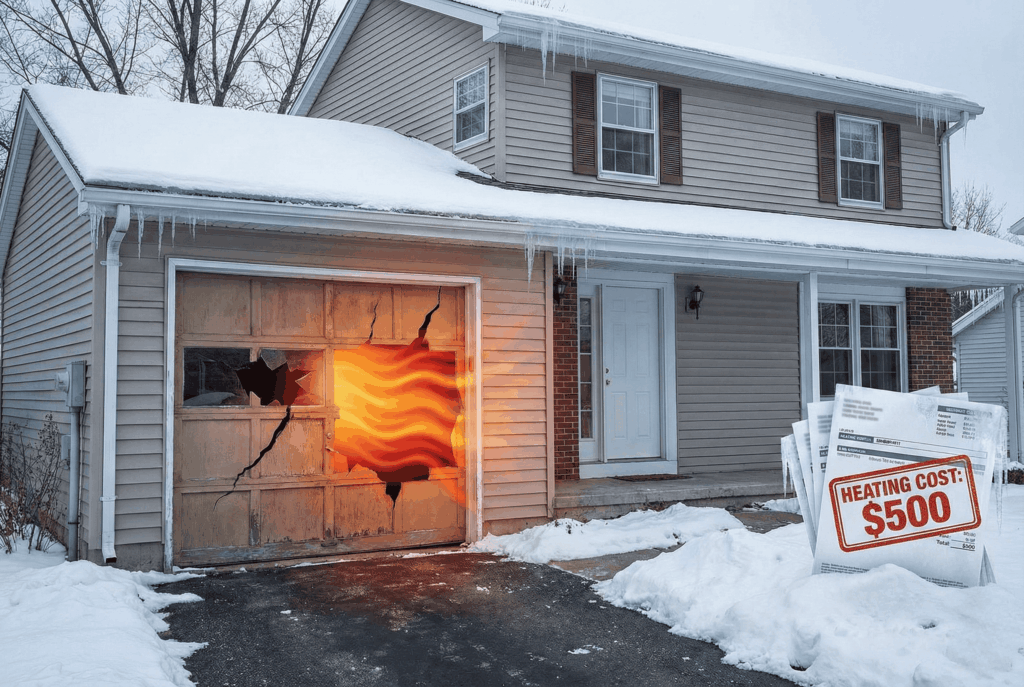
Most homeowners don’t think about their garage door when they’re trying to lower their energy bills.
But if your garage shares a wall with your home – and especially if you have rooms above it – that garage door plays a bigger role in your home’s energy efficiency than you might realize.
The Hidden Energy Leak in Your Garage
A damaged or poorly maintained garage door essentially creates a giant opening in your home’s thermal envelope. Cold air rushes in during winter, hot air invades during summer, and your heating system works overtime trying to compensate. The result? Higher energy bills and rooms that never quite feel comfortable.
Think about it this way: even a small gap around your garage door – maybe just a quarter inch – adds up to about nine square inches of open space. That’s like leaving a window cracked open all winter long. Worn weather stripping, warped panels, or a door that doesn’t seal properly at the bottom can create gaps much larger than that.
Why Attached Garages Make the Problem Worse
The problem gets worse if you have an attached garage with living space above it, which is common in many Virginia homes. Heat rises, so when cold air fills your garage, it doesn’t stay there. It works its way up into the rooms above, making those spaces harder (and more expensive) to heat. Your furnace runs longer cycles, your energy bills climb, and you’re still left with cold floors and chilly bedrooms.
Insulated garage doors make a noticeable difference here. They create a thermal barrier between the outside temperature and your garage, which helps maintain more stable temperatures throughout your home. If your current door is uninsulated or the insulation has deteriorated, you’re essentially paying to heat (or cool) the outdoors.
When Good Insulation Isn’t Enough
But insulation only works if the door is functioning properly. Broken springs, damaged panels, or a door that doesn’t close completely all compromise that thermal barrier. Even the best insulated door can’t do its job if it’s not sealing correctly.
The good news? Addressing garage door issues is often more affordable than you’d think, especially compared to the long-term cost of wasted energy. Sometimes it’s as simple as replacing worn weather stripping or adjusting the door’s alignment. Other times, upgrading to an insulated door makes sense – particularly if your current door is older or showing signs of wear.
What Makes Gilman Stand Out?
At Gilman, we understand how all your home’s systems work together. Your garage door isn’t separate from your heating and cooling – it’s part of the same comfort equation.
That’s why we’ve expanded our services to include garage door installation, repair, and maintenance alongside our heating, cooling, and plumbing expertise. We can help you identify whether your garage door is costing you money and show you the most cost-effective solutions.
Because comfort shouldn’t cost more than it has to.